Why does a scraped ceiling need refinishing?
Popcorn texture was a shortcut. It let builders skip the time-consuming work of finishing ceiling drywall to a high standard, because the texture hid ridged tape joints, thin spots and dents. When we scrape it off in Sioux Falls homes from the 1960s through the 1980s, we usually find the drywall work that was never meant to be seen.
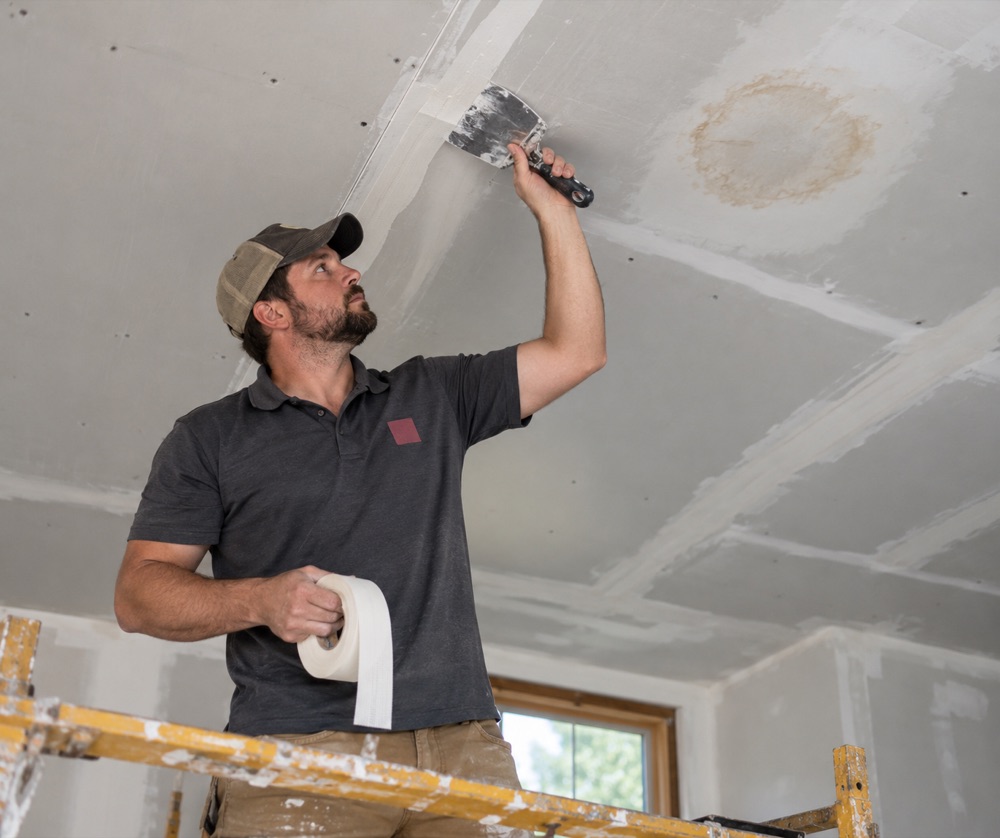 What the texture was hiding
Even a careful scrape leaves light residue and the odd scuff in the paper. Paint on its own magnifies all of that, especially in rooms with big windows or recessed lights that throw light across the ceiling. Refinishing is the step that fixes it.
Skim coating, explained
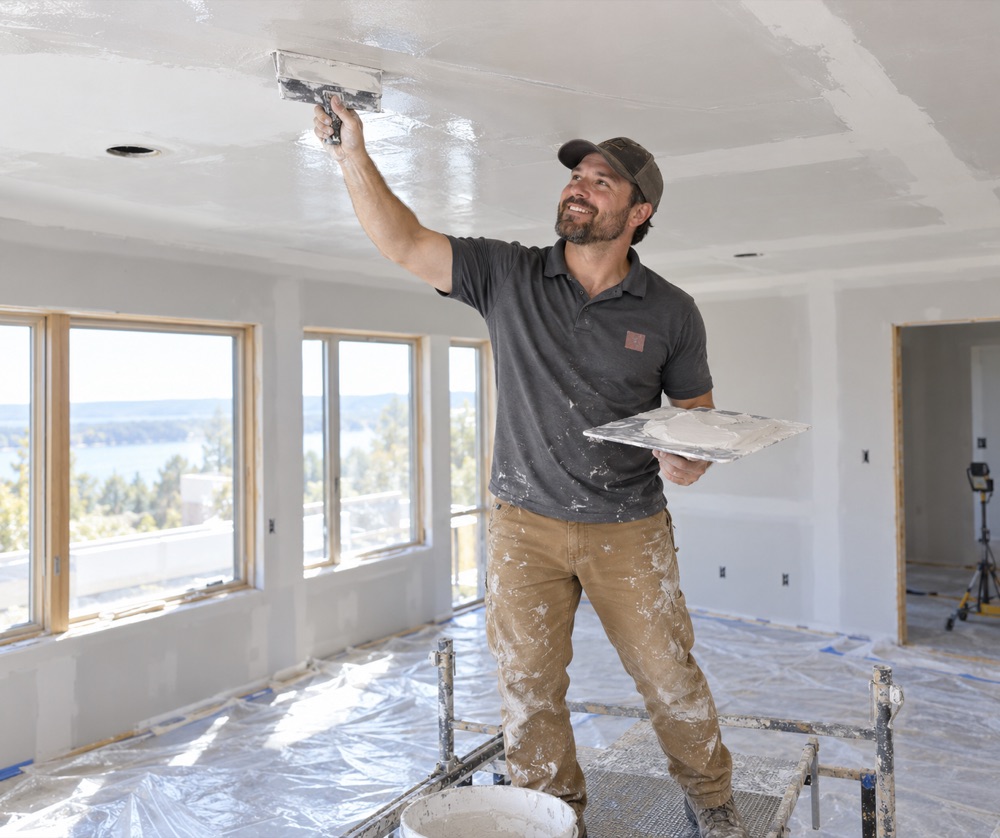
A skim coat is a thin layer of joint compound spread over the whole ceiling, not just the seams. It fills small hollows, buries leftover texture and evens out the surface so the ceiling reads as one flat plane.
The process we follow:
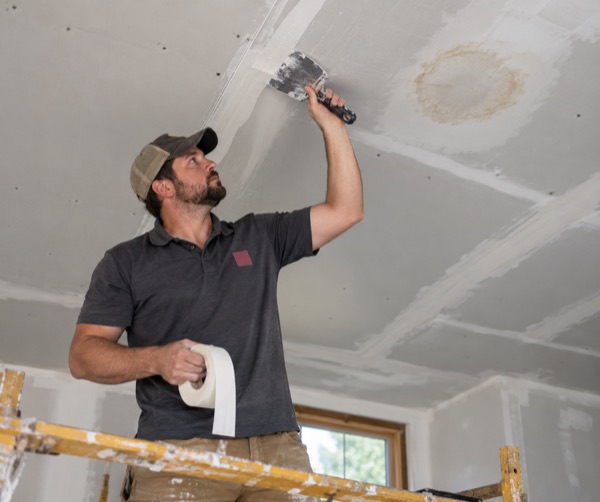
- Repairs first. Popped screws get reset, loose tape is cut out and re-taped, gouges are filled, and stains are sealed. Our drywall and ceiling repair page covers this part.
- Prime if needed. Where scraping left the paper fuzzy or the old surface is chalky, we apply a sealing primer so the compound bonds and the paper does not bubble.
- First skim coat. Compound thinned to a workable consistency goes on with a roller or wide knife, then is pulled tight with a wide blade.
- Dry, sand, check. After it dries, we sand lightly and hold a work light at a low angle to find ridges and hollows.
- Second coat where needed. Another thin pass, usually across the direction of the first.
- Final sand and dust removal. Then the ceiling is ready for primer and paint.
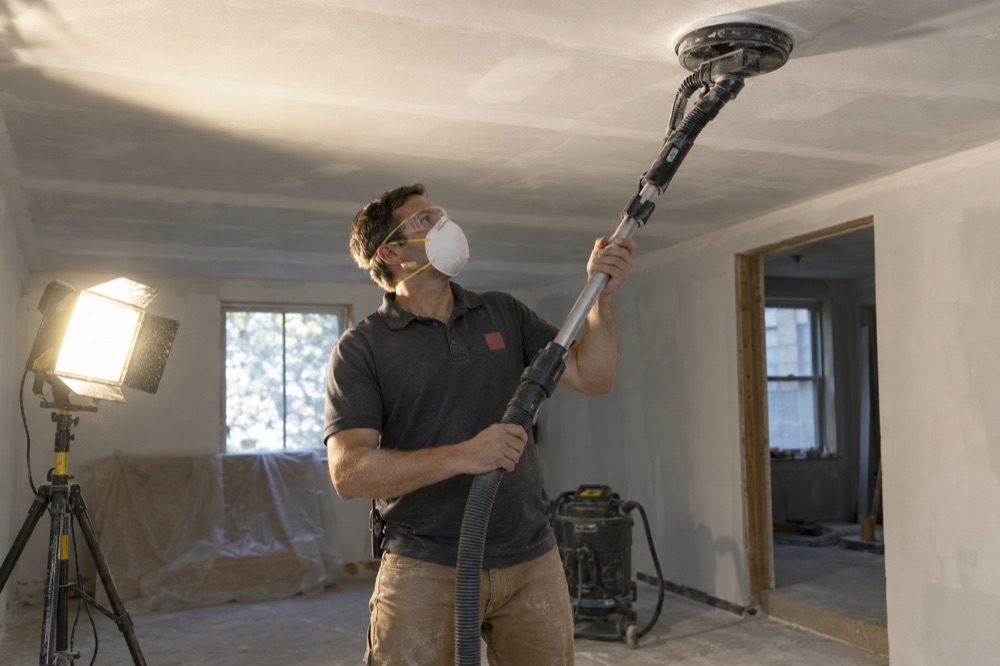 Low-angle light finds every ridge
Smooth, orange peel or knockdown
You have a choice of finish, and the right one depends on the room and budget.
| Finish | What it looks like | Good for | Trade-off |
|---|---|---|---|
| Smooth | Flat, no texture | Living rooms, kitchens, modern look | Most labor; shows flaws under side light if rushed |
| Light knockdown | Soft flattened splatter | Bedrooms, basements, rooms with uneven board | Less labor; still a texture |
| Orange peel | Fine bumpy texture like citrus skin | Hallways, rooms where some texture is fine | Least labor of the three |
Most people who are getting rid of popcorn want smooth. That is understandable, but in a basement with older board or a bedroom with a lot of ceiling damage, a light knockdown can look great for less money. We will show you samples and give you prices for both when they make sense.
Sioux Falls weather and drying time
Joint compound dries by evaporation, so the air in the house matters. On muggy summer days, coats take longer to dry and we may run a dehumidifier in the sealed room. In the middle of winter, furnace-heated air is dry and compound dries quickly, which is good for the schedule but can lead to cracking if a coat is too thick. We keep coats thin and do not rush the next one before the last has fully dried. If a coat goes on before the one below is dry, it can shrink and crack later.
How long does refinishing take?
For one room, the skim coat stage usually stretches across two or three working days because of drying between coats. A whole floor of bedrooms and a living room is often skimmed in parallel, so the total does not multiply room by room. You get a schedule with the quote showing which days the crew will be in which rooms.
- Coat 1Repairs, then the first thin skim coat
- CheckDry, light sand, low-angle light check
- Coat 2Second pass where needed
- 2–3 daysThen primer and paint
Keeping sanding dust contained
Sanding joint compound makes fine white dust. The room stays sealed with plastic and zipper doors from scraping through sanding, the vents remain covered, and we use sanders connected to a HEPA vacuum where possible. Between coats we clean up so dust does not get tracked through the house.
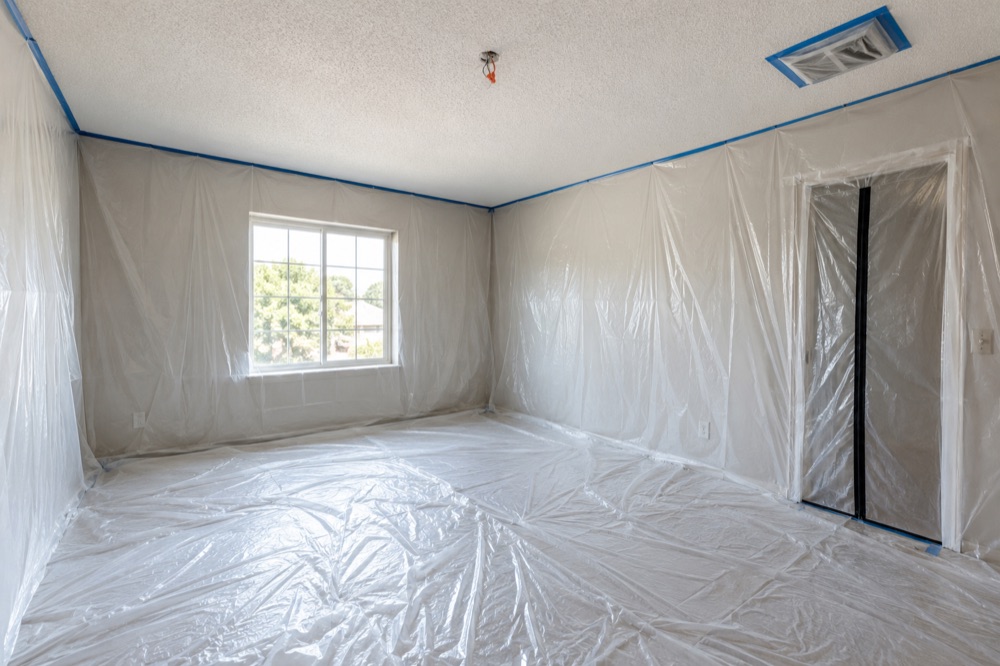 Sealed from scrape to sand
Can you refinish a ceiling that never had popcorn?
Yes. We skim coat ceilings with old cracked texture, ceilings with a lot of visible patches, and ceilings in older homes where the plaster or drywall has gone wavy. The same process applies, without the scraping.