Why does priming matter so much on ceilings?
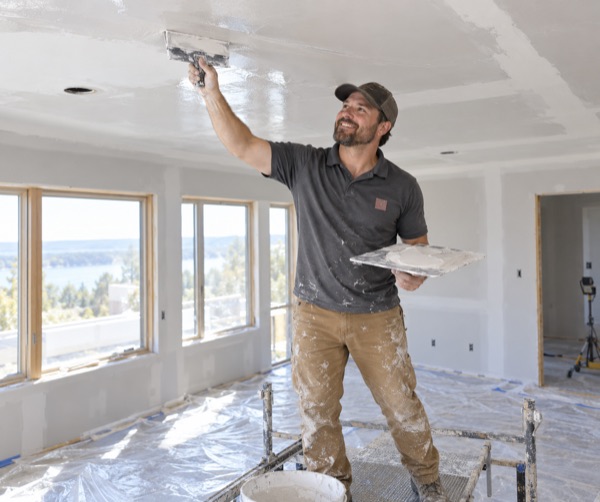
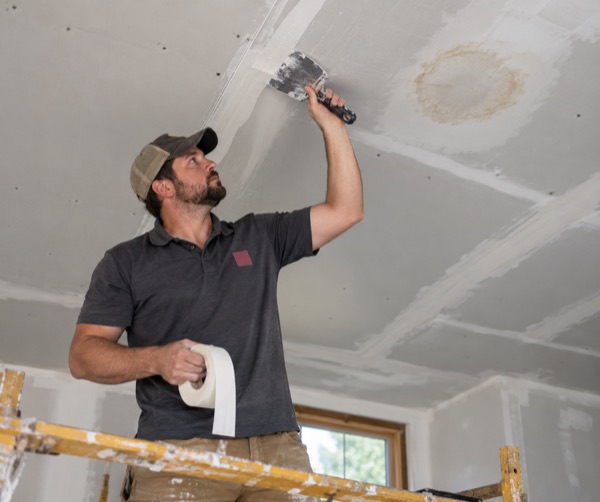
After popcorn removal and skim coating, a ceiling is a patchwork of new joint compound, old drywall paper and patched spots. Each of those soaks up paint at a different rate. Paint them without primer and the finish dries unevenly, showing slightly shiny or dull spots under side light. Painters call it flashing, and ceilings show it badly because light from windows hits them at a low angle.
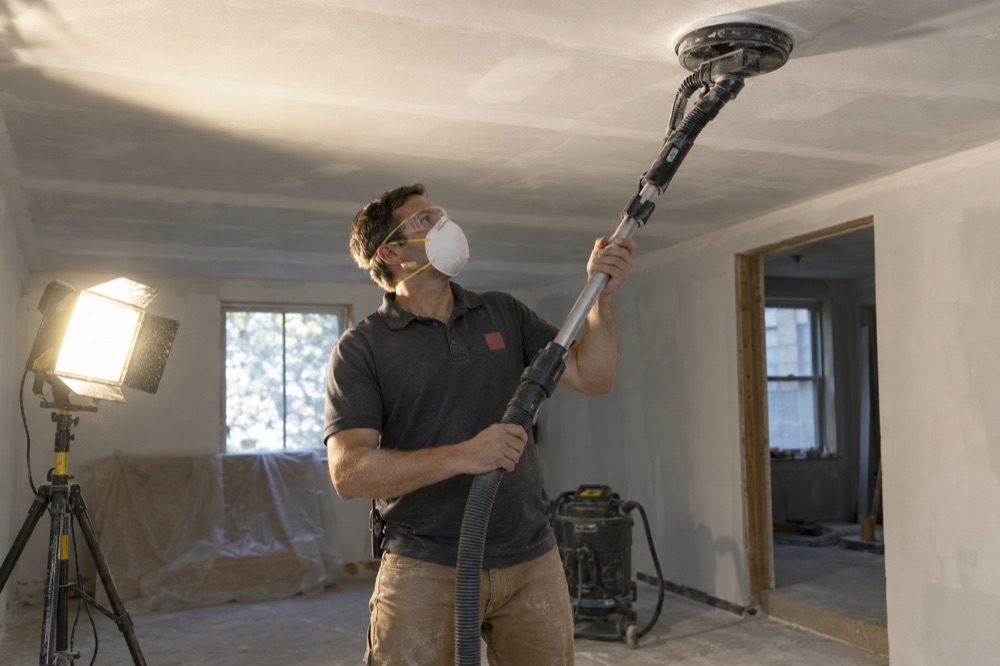 Sanded, dusted, then primed
Primer gives the whole ceiling one even surface. We use a drywall primer on new compound, and a stain-blocking primer anywhere there were water marks, smoke yellowing or old marker. Skipping that stain blocker is why brown rings come back through fresh white paint a week later.
Primer and flat ceiling paint
For most ceilings, flat ceiling paint. Flat paint reflects light evenly in every direction, so it hides small imperfections far better than eggshell or satin. Ceiling paints are also formulated to spatter less when rolled overhead.
Bathrooms and kitchens can be different. A ceiling over a shower that gets a lot of steam may do better with a paint rated for high humidity. We will recommend a product for each room and list it on the quote.
Rolling for an even finish
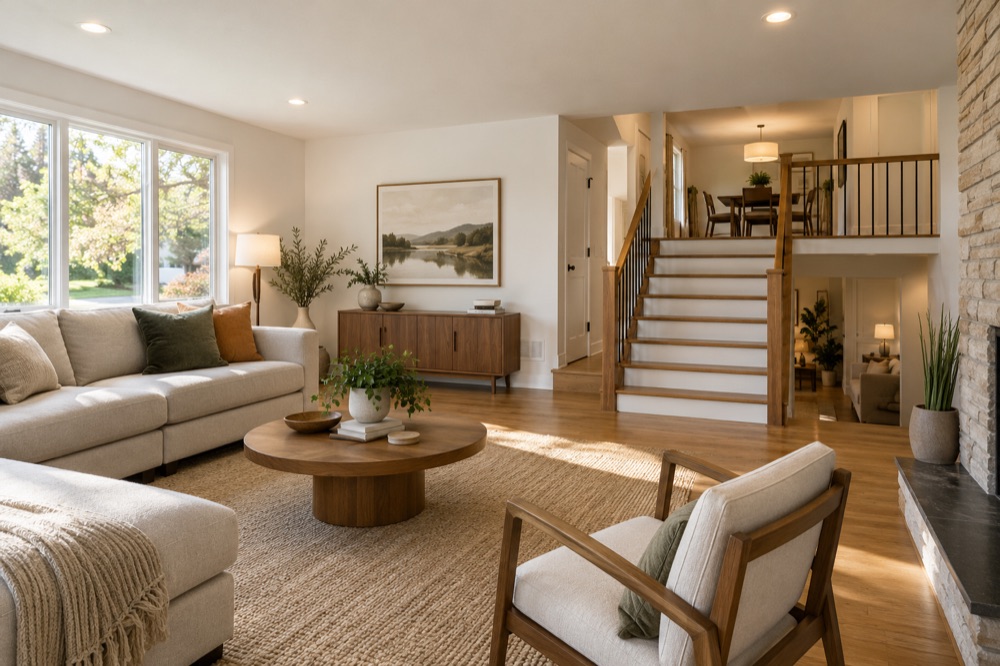 Flat white, no lap marks
Cutting in first. A brush line goes around the edges of the ceiling where it meets the walls, and around any fixtures. Where the wall and ceiling are different colors, we keep that line straight, because a wavy line is the first thing the eye catches.
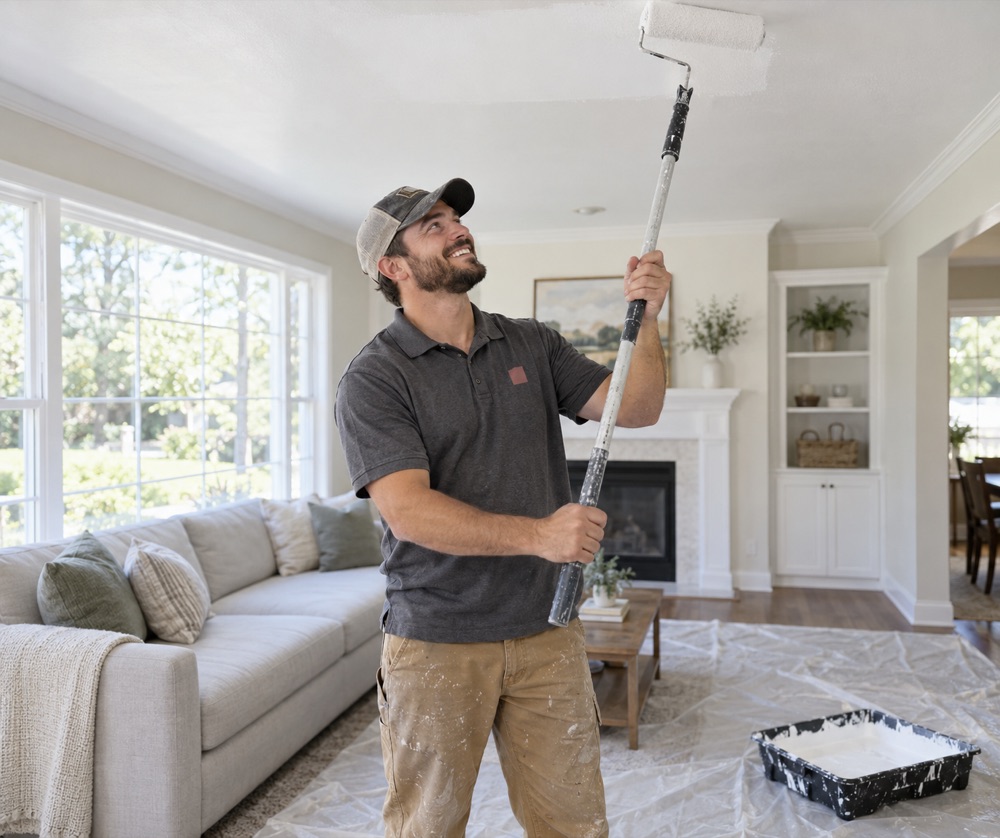
Rolling in one direction. We roll the ceiling in parallel passes, working toward the windows so we can see wet edges. Keeping a wet edge stops the lap marks you get when fresh paint overlaps paint that has started to dry.
Two coats. Primer plus two finish coats is our standard on new compound. The second coat goes on across the first for even coverage.
Checking with light. Between coats, we look along the ceiling with a work light or the room's own window light to catch holidays, thin spots and roller lines.
How do Sioux Falls conditions affect painting?
Paint behaves differently in different seasons. On humid summer days, drying slows and the time between coats stretches. Paint in a heated house in winter dries faster, which shortens the schedule but leaves less time to keep a wet edge on a big ceiling. We plan the order of the rooms around that, and in very dry conditions we work in smaller sections.
We also watch the temperature in rooms over unheated spaces such as garages and porches. Most paint labels list a minimum application temperature, and we follow it.
Lead paint in pre-1978 homes
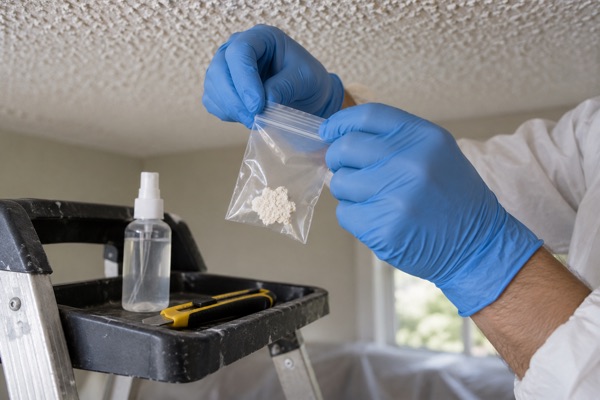
If your house was built before 1978 and the ceiling or popcorn texture has been painted over the years, there may be lead in the older paint layers. The EPA's Renovation, Repair and Painting rule applies to paid contractors working on painted surfaces in pre-1978 homes when more than six square feet of painted surface is disturbed in a room. Painting over intact paint does not disturb it. Scraping, sanding or removing painted texture does. If your ceiling falls into that category, ask how any contractor you hire handles lead-safe work practices.
Painting as the last step
For most customers, painting is the last step of one plan: test, remove, repair, skim coat, then prime and paint. The plastic stays up through the first finish coat. After the final coat dries to the touch, we take down the plastic, reinstall light fixtures and fans, and do a final walk-through with you so you can point out anything you want touched up while we are still there.
- Day 1Seal the room, mist and scrape
- Days 2–3Repairs, skim coats, drying
- 2–3 daysOne room, setup to final coat
- ~1 weekA whole main floor
Can we paint just one ceiling?
Yes. Small jobs are welcome, whether it is a single stained ceiling, a ceiling that was never painted after a repair, or a room where the previous owner left a patchy finish.