What do national cost guides say?
When we checked in October 2026, two of the big national cost guides published similar ranges for popcorn ceiling removal:
Angi typical project
$932to$3,092
Typical project around $2,012
Angi · checked Oct 2026
HomeAdvisor normal range
$933to$3,077
Average around $2,001
HomeAdvisor · checked Oct 2026
Dumpster for debris
$300to$475
per week
Angi
- Angi listed most projects at about $932 to $3,092, with a typical project around $2,012.
- HomeAdvisor listed a normal range of about $933 to $3,077, with an average around $2,001, and noted that jobs can run well above that for large homes with tall ceilings.
Angi also listed dumpster rental for debris at about $300 to $475 per week, and HomeAdvisor noted that asbestos testing and abatement, when needed, is a separate project with its own cost.
These are national figures built from many markets. They are not Sioux Falls quotes, and they do not always include a smooth finish and paint. Use them as a reference point, not as a price list.
Seven things that move the price
Ceiling area and number of rooms
Square footage is the base of every estimate. But setup time, meaning moving furniture, hanging plastic and sealing vents, is similar for a small room and a larger one. That is why bigger jobs usually cost less per square foot than a single small room.
Painted or unpainted texture
Unpainted popcorn softens with water and scrapes quickly. Painted popcorn does not absorb water, so it takes scoring, a removal product or more scraping time. Heavily painted ceilings are sometimes cheaper to cover with new drywall than to scrape. Ask any contractor which method they plan to use.
Ceiling height and access
Standard 8-foot ceilings are reached from a platform or short ladder. Vaulted living rooms, two-story entries and split-foyer stairwells need scaffolding or tall rolling platforms. That adds setup time and often a separate line on the quote.
The finish you want
This is often the biggest swing. Bare scraped drywall is the cheapest stopping point, but almost nobody wants to live with it. A light knockdown or orange-peel texture hides small flaws and costs less to apply. A smooth, skim-coated ceiling takes the most labor because it has to be truly flat. Our skim coat and refinishing page compares the options.
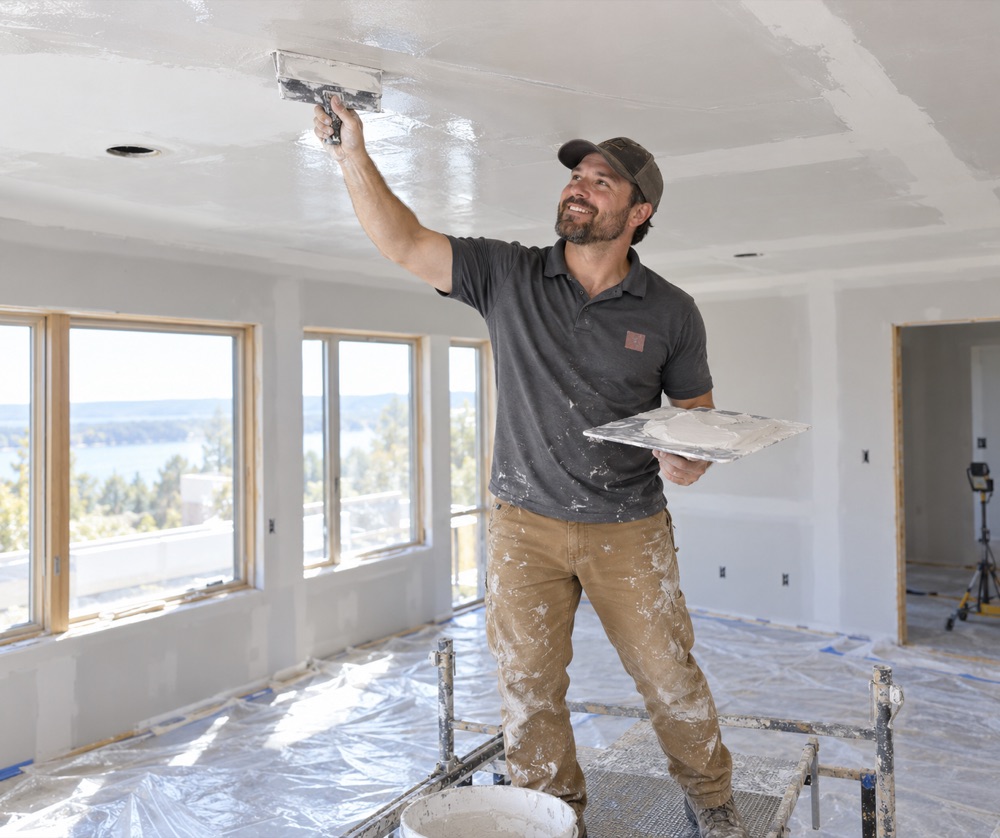 Smooth takes the most labor
Repairs underneath
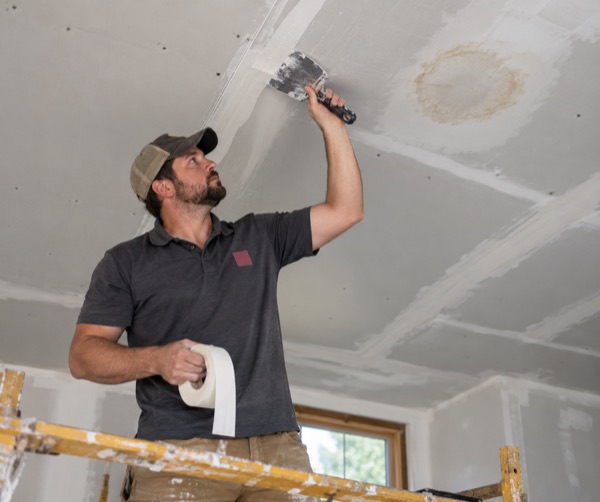
Popped screws, ridged tape seams and gouges are normal and are usually built into a full-finish quote. Bigger problems such as water-damaged drywall, sagging sections or old fixture holes add material and time. See drywall and ceiling repair.
Testing and abatement
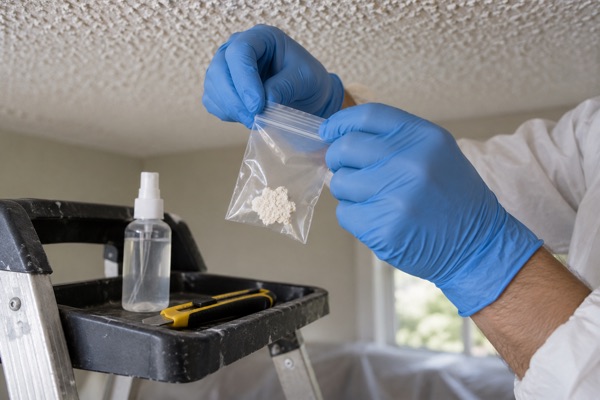
For homes where the texture may date from before the mid-1980s, the asbestos test is a small line on the overall budget. If the result is positive, abatement by a state-certified contractor is a separate contract and a larger cost. You might also choose to enclose the ceiling with new drywall instead, which avoids removal.
Lead-safe work on older painted ceilings
In homes built before 1978, painted ceilings may contain lead in older paint layers. The EPA's Renovation, Repair and Painting rule applies to paid contractors when the work disturbs more than six square feet of painted surface in a room, and lead-safe practices add time and materials.
Sioux Falls homes and price
A few local patterns come up a lot:
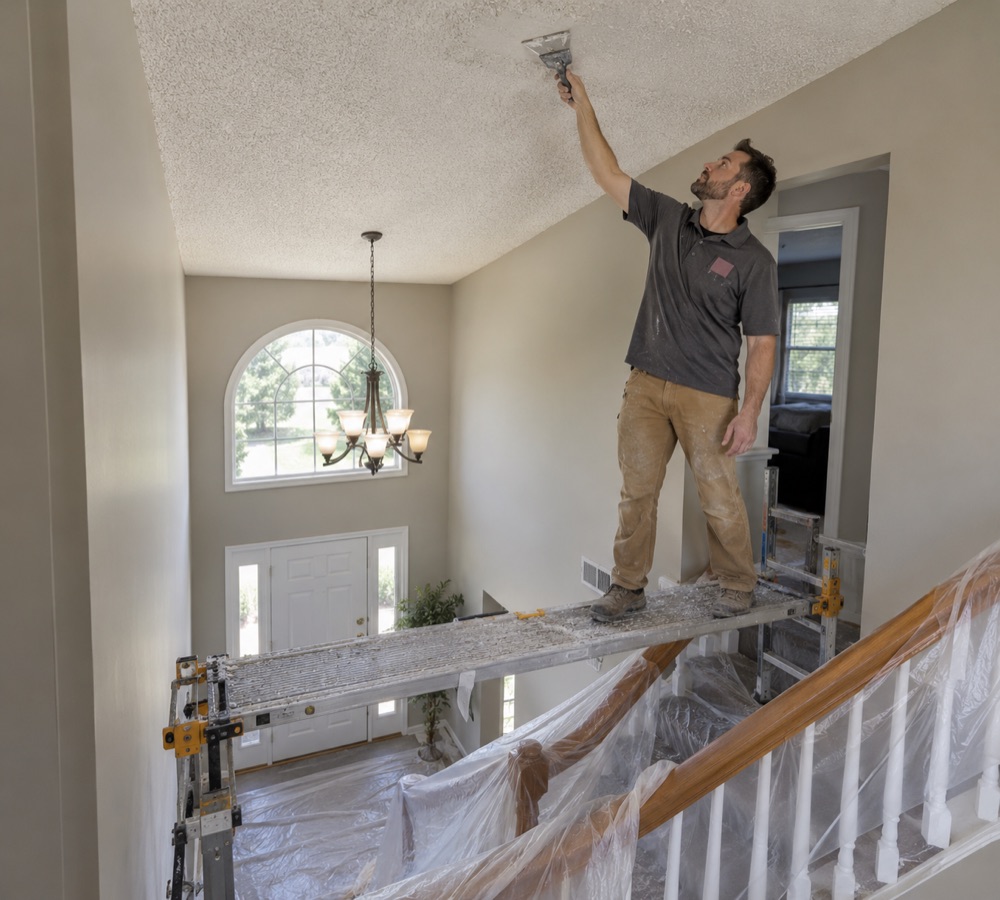 Stairwells add a platform line
- Split-foyer and split-level stairwells are common in the city's 1960s through 1980s neighborhoods and need platforms rather than ladders.
- Ice dam water stains near exterior walls show up after hard winters and add repair and stain-blocking primer.
- Finished basements often have soffits around ductwork, which take more time per square foot than open ceilings.
- Older central neighborhoods may have plaster ceilings, which can call for skimming over or covering instead of scraping.
What should a written quote include?
A quote you can compare should list each of these, so you can see what is and is not included:
 Quote after a walk-through
| Item | What to look for |
|---|---|
| Testing | Who takes samples, which lab, how many areas |
| Containment | Floor and wall plastic, zipper doors, vent sealing |
| Removal | Method for painted vs unpainted texture |
| Debris | Bagging, hauling and disposal included |
| Repairs | Screw pops, tape, gouges, stains, and how bigger damage is priced |
| Finish | Smooth skim coat or texture, number of coats |
| Primer and paint | Product type, number of coats, ceiling color |
| Fixtures | Removal and reinstallation of lights and fans |
| Schedule | Days on site and which rooms are off limits when |
If a quote is just a single number for "remove popcorn," ask what condition the ceiling will be in when the crew leaves.
Ways to lower the cost
A few honest ways:
- Move furniture yourself before the crew arrives.
- Choose a light texture instead of smooth in bedrooms or basements where it will not bother you.
- Group rooms into one job instead of several separate visits.
- Do the painting yourself after we skim and prime, if you are comfortable rolling a ceiling.
- Skip removal on a positive ceiling you are not remodeling. Leaving undamaged material alone is a legitimate option the EPA describes.
What we do not recommend is skipping the test on an older home to save money. The test is cheap. Scraping a positive ceiling by mistake contaminates the room and leads to a far more expensive cleanup.