What problems show up after popcorn comes off?
In older Sioux Falls homes, scraping a ceiling is a bit like pulling up old carpet. You find out what the builder covered up. The usual list:
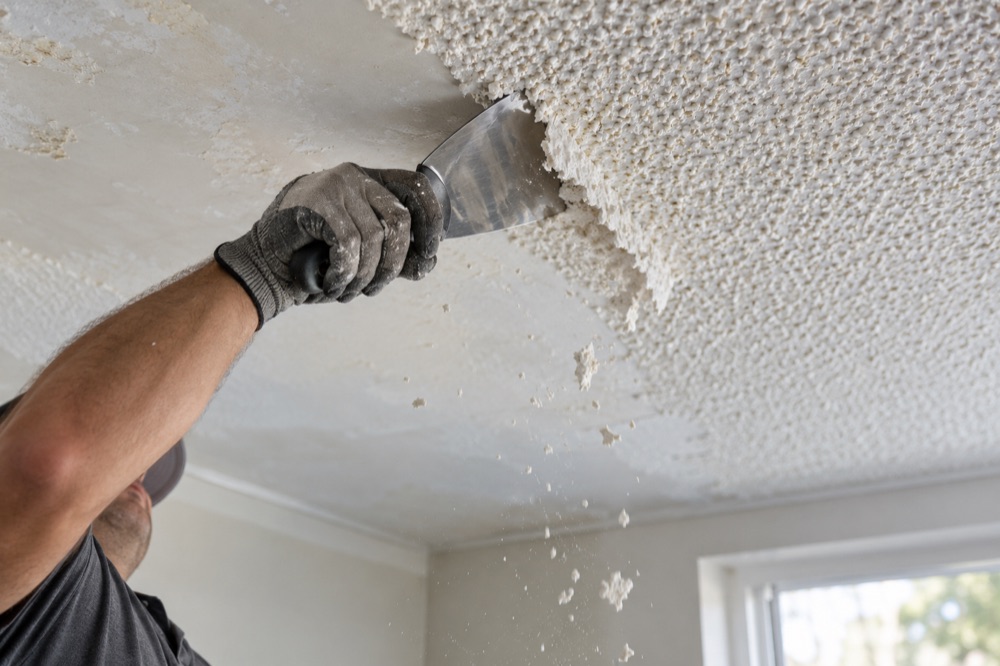 Scraping shows what the builder covered
- Popped fasteners. Nails or screws that worked loose as the framing dried and shifted, leaving small round bumps or craters.
- Ridged or loose tape. Joints that were taped quickly because the texture would hide them. Some tape is bubbled or lifting.
- Cracks along seams. Often in long runs across living rooms, or where the ceiling meets a wall.
- Gouges. From scraping, from earlier repairs, or from moving furniture years ago.
- Water stains. Brown rings from a bathroom leak, a roof leak, or an attic ice dam near an outside wall.
- Old fixture holes. Where a fan or light was moved and the hole was hidden under texture.
None of these are unusual. They just have to be handled before skim coating, or they show up again later.
How each problem gets fixed
Popped screws and nails. We drive a new drywall screw beside the popped fastener to pull the board tight to the framing, then reset or remove the old one and fill both.
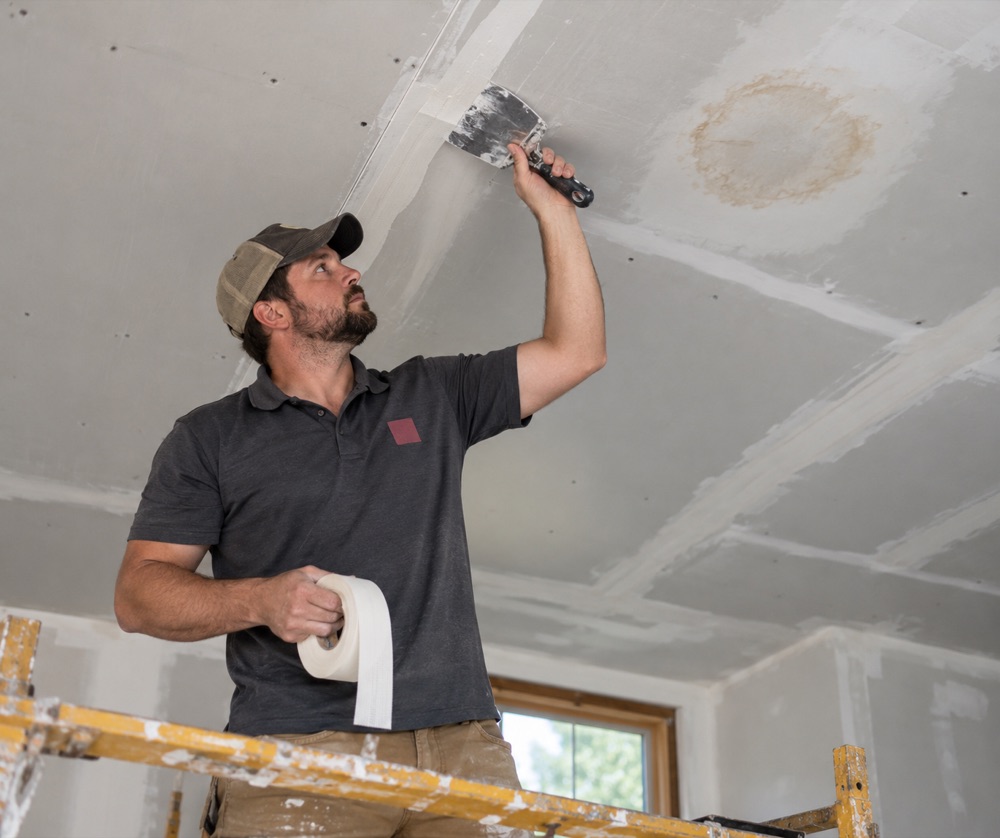
Loose or bubbled tape. Lifting tape is cut out, the joint is cleaned and re-taped with fresh compound, then feathered wide so the seam disappears once the ceiling is skimmed.
Cracks. Cracks at seams are opened slightly, taped, and filled. A crack that keeps coming back can point to movement in the framing, and we will tell you when we think that is the case.
Gouges and dents. Filled with setting-type compound, which hardens chemically and shrinks less than premixed compound.
Holes. Small holes get a patch. Larger ones get a piece of new drywall screwed to backing, then taped and finished.
 Repairs first, then the skim coat
Water stains and damage
Water stains need more thought than the other repairs. First, the source has to be fixed. In Sioux Falls, the common sources are bathroom plumbing above a ceiling, roof leaks, and ice dams in winter that push water back under shingles near the eaves. If the source is still active, a new finish will stain again.
Next we check the drywall. If it is firm and only discolored, we seal the stain with a stain-blocking primer. If it is soft, crumbly or sagging, we cut out the damaged section back to solid board and replace it. When there is any sign of ongoing moisture or mold growth on the back of the board, we stop and recommend dealing with that first.
Why repairs come before the skim coat
A skim coat is thin. It evens out the surface but does not hold a loose piece of tape down or stop a screw from popping again. If repairs are skipped, the ceiling can look perfect the day it is painted and then show a ridge or a pop a few months later as the house goes through a heating season.
Repairs also need time. Setting-type compound hardens on its own schedule, and tape joints need a coat or two before the full skim goes over them. Building that time into the plan is part of quoting a ceiling job honestly.
Do you replace whole ceilings?
Sometimes that is the better answer. If a ceiling has several large water-damaged areas, heavy sagging, or a painted popcorn that will not come off cleanly, it can be faster to cover the old ceiling with new 1/4-inch or 3/8-inch drywall, or to replace sections entirely. We will compare the options in the quote.
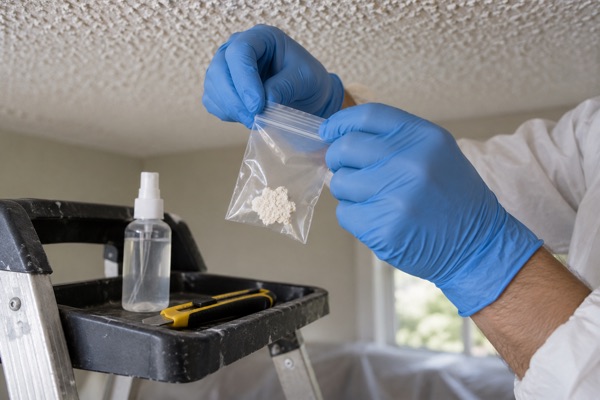
When an old ceiling tested positive for asbestos, cutting out sections is not something we do. Enclosing it with new drywall, without cutting or sanding the old material, is one of the options the EPA describes. Removal goes to a certified abatement contractor.
How does repair fit into the full job?
For most customers, repair is one step in a single schedule: scrape, repair, skim coat, then prime and paint. The quote lists the repair work separately so you can see what is being fixed and why. If you scraped the popcorn yourself, we can start at the repair stage.
- Day 1Seal the room, mist and scrape
- Days 2–3Repairs, skim coats, drying
- 2–3 daysOne room, setup to final coat
- ~1 weekA whole main floor